



Yesterday in Yellowknife, a Canadian first occurred: during a Special Council Meeting the city voted unanimously to endorse proportional representation at the federal level.
How this happened is a roadmap for a reformer who wants to do something quickly to improve Canadian democracy.
Yellowknife Mayor Ben Hendrickson summarizes the times we live in making democratic renewal necessary again
Smoothing Out Federal Support: Why Consistency is Key for the North
The historic vote comes at an interesting moment for the territories, which are heavily dependent on the federal government to maintain the quality of life for residents. Right now, residents are excited about renewed federal investment, but they know that a change of government can torpedo those plans.
Although originally a mining town, many people now live their entire lives in Yellowknife from birth to death. Residents want to avoid the massive economic turbulence of the past caused by what (to people in the south) would be a buried headline about a military base location moving.
A small policy tweak on where a federal project is located would upend the city. Everyone sleeps next to their own elephant.
Proportional representation creates the kind of pragmatic stable policy from the federal government that Yellowknifers rely on for their quality of life.
Councillor Tom Mclennan who introduced the motion talking about federal funding stability. According to him "a system of proportional representation would smooth out large swings in federal programs and dollars that have a huge impact on the city of"
Making Every Vote Count Across the Political Spectrum
The resolution also highlights how the current First-Past-the-Post system limits the diversity of political candidates, ultimately leading to a lopsided democracy that disenfranchises many residents. In the Northwest Territories, this reality is stark: Conservatives haven't had a representative in Parliament for over 40 years. Never being of practical help to the Conservatives feeds into the stability issue, "What will they do to us when they do win?"
Councillor Mclennan stated "The last time the NWT was represented by a conservative voice was in 1988 Despite the fact that a substantial number of our constituents vote for that party, this means 48 years and counting of conservative voters in the NWT not having been represented in the decisions made in Ottawa"
This dynamic isn't unique to the North, and cuts across party lines. Many Liberals in rural Canada or Conservatives in major urban centers can relate to the frustration of spending a lifetime diligently voting but never electing anyone. Adopting a system where every single vote actually counts ensures that all political stripes are fairly represented. This is likely a big part of why turnouts are consistently higher in proportional systems.
The Conan the Barbarian Strategy
How this occurred is down to the idiosyncratic strategy of one unusual local: Jeremy Flatt. In 2024 after being inspired by electoral reform advocates he witnessed in Idaho he started a small group in the Northwest Territories with the help of Fair Vote Canada.
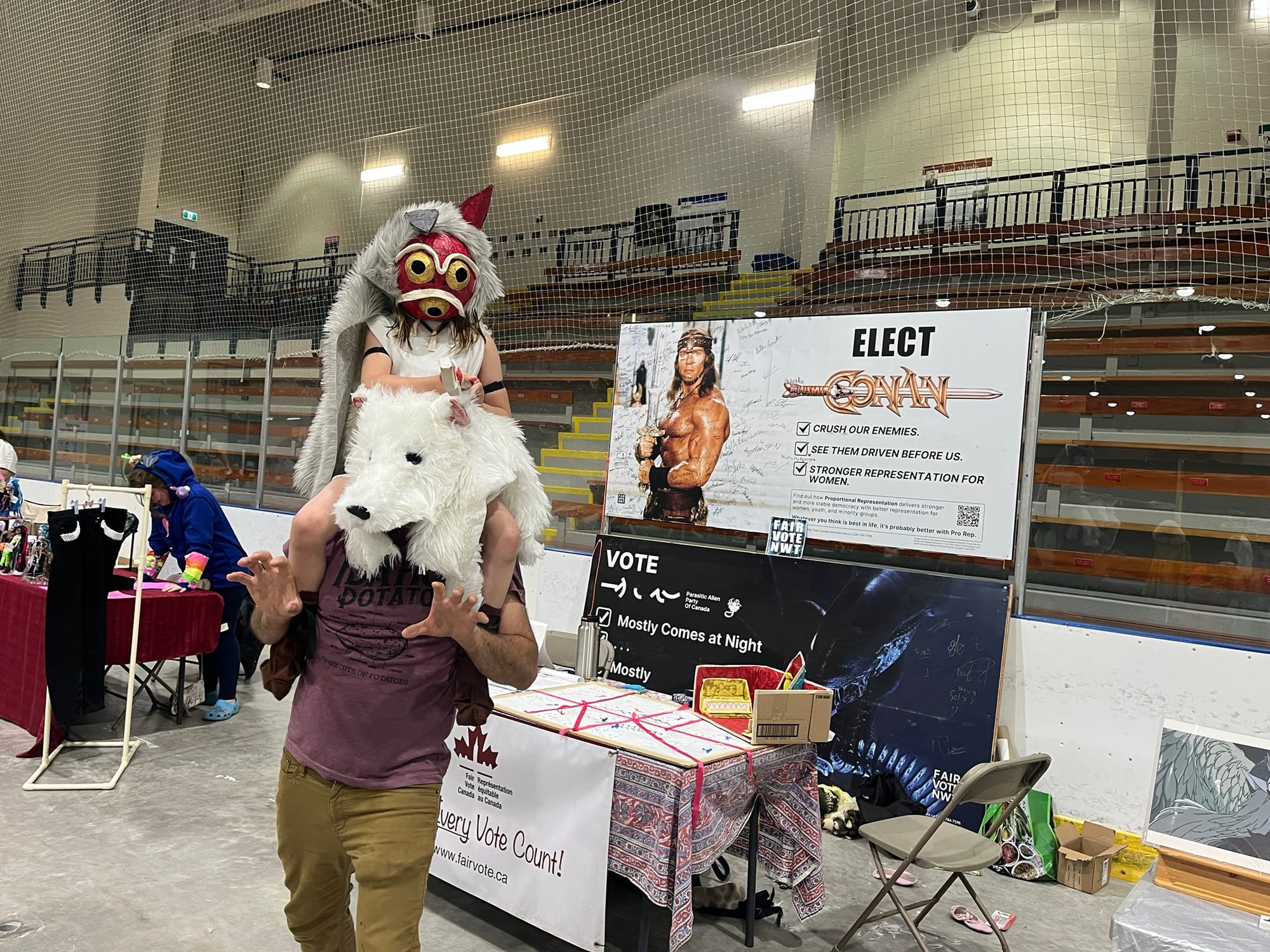
They met regularly to grab a drink, talk about democracy and amongst the fun: Actually do something. To grab the public's attention, they created a pair of parody election signs featuring Conan the Barbarian and Aliens which made the locals laugh.
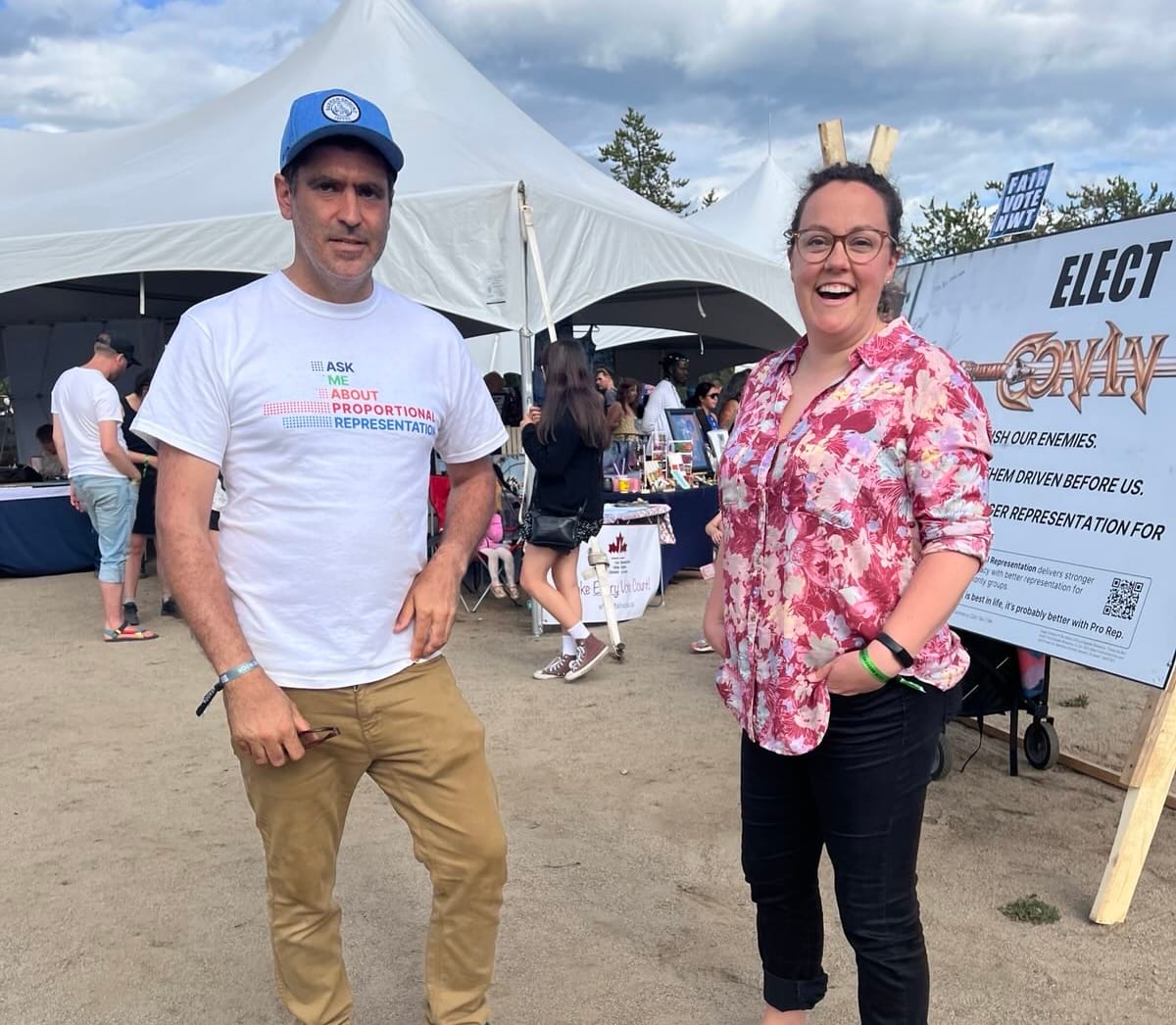
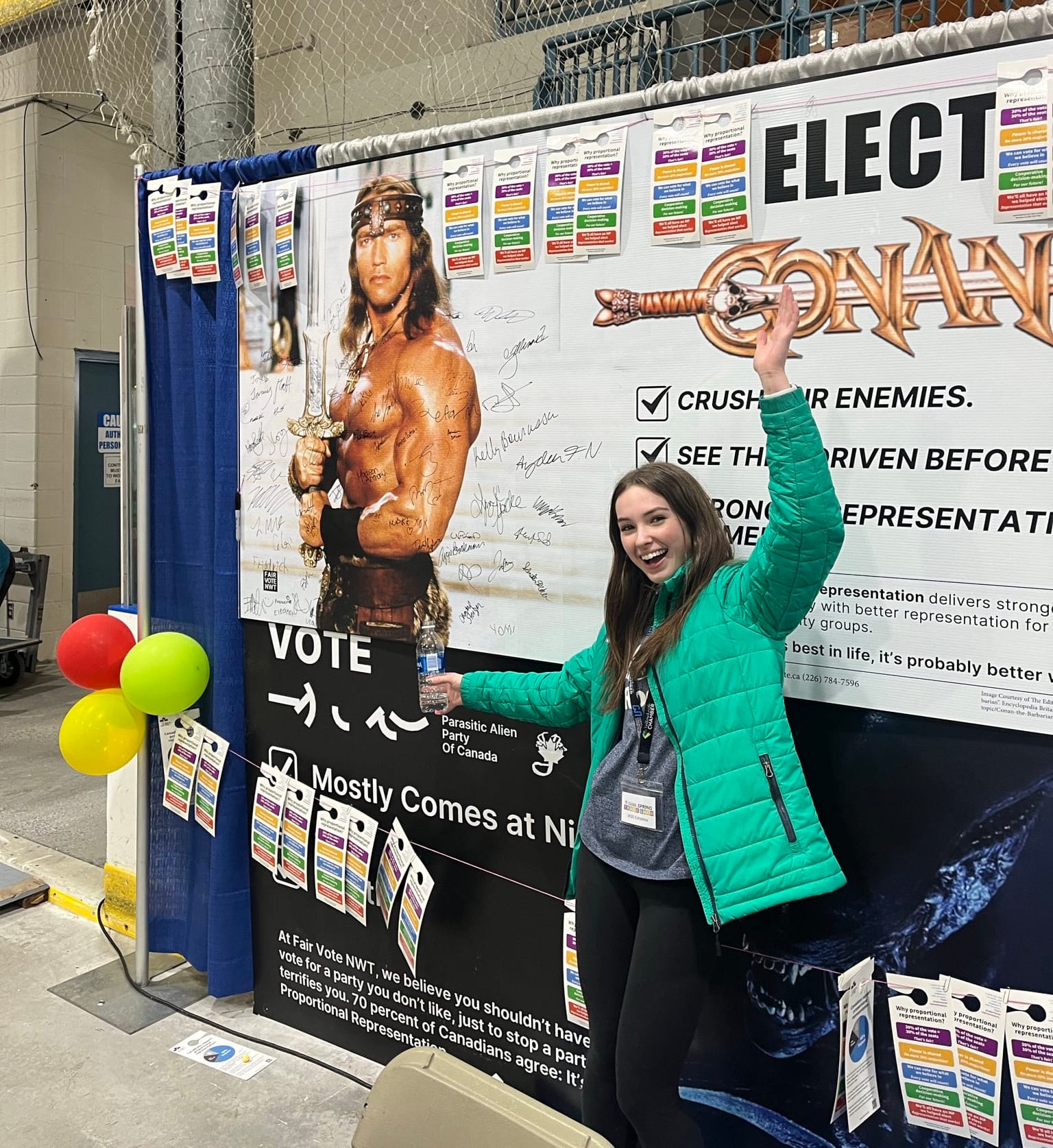
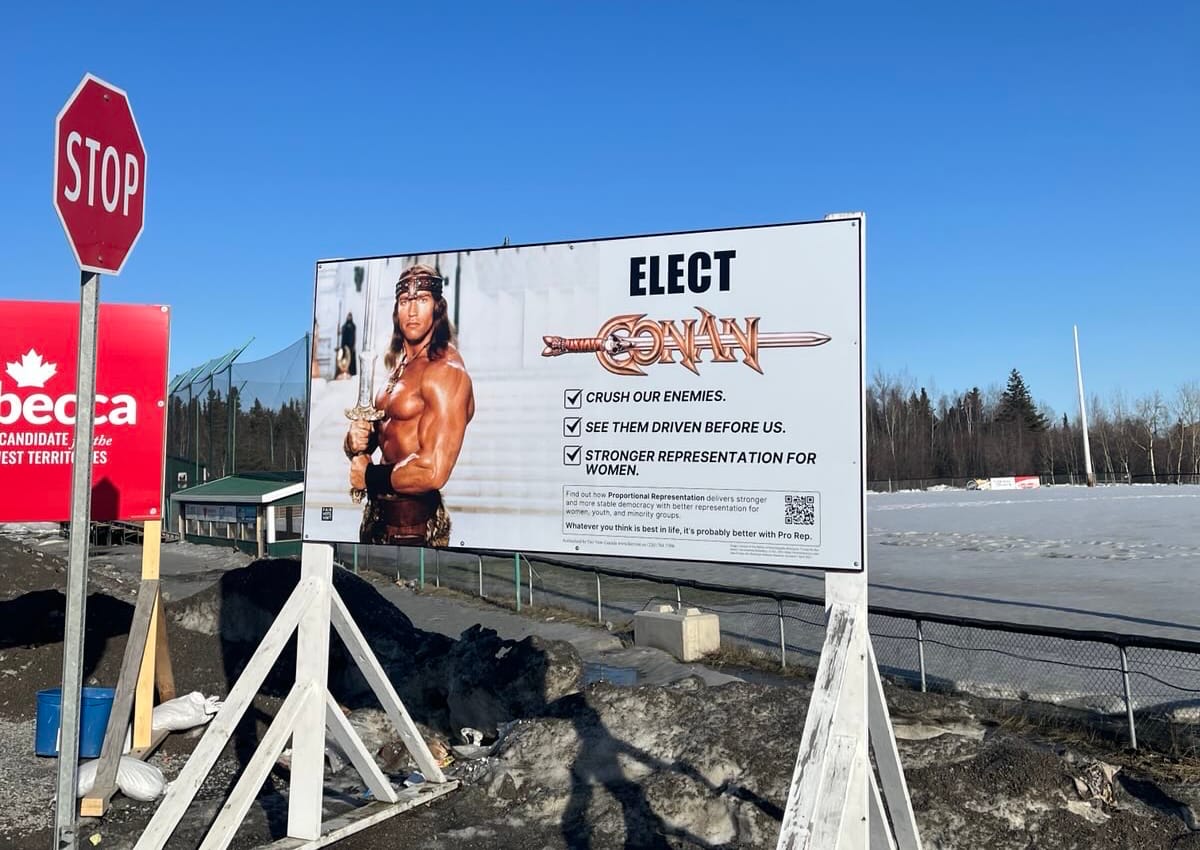
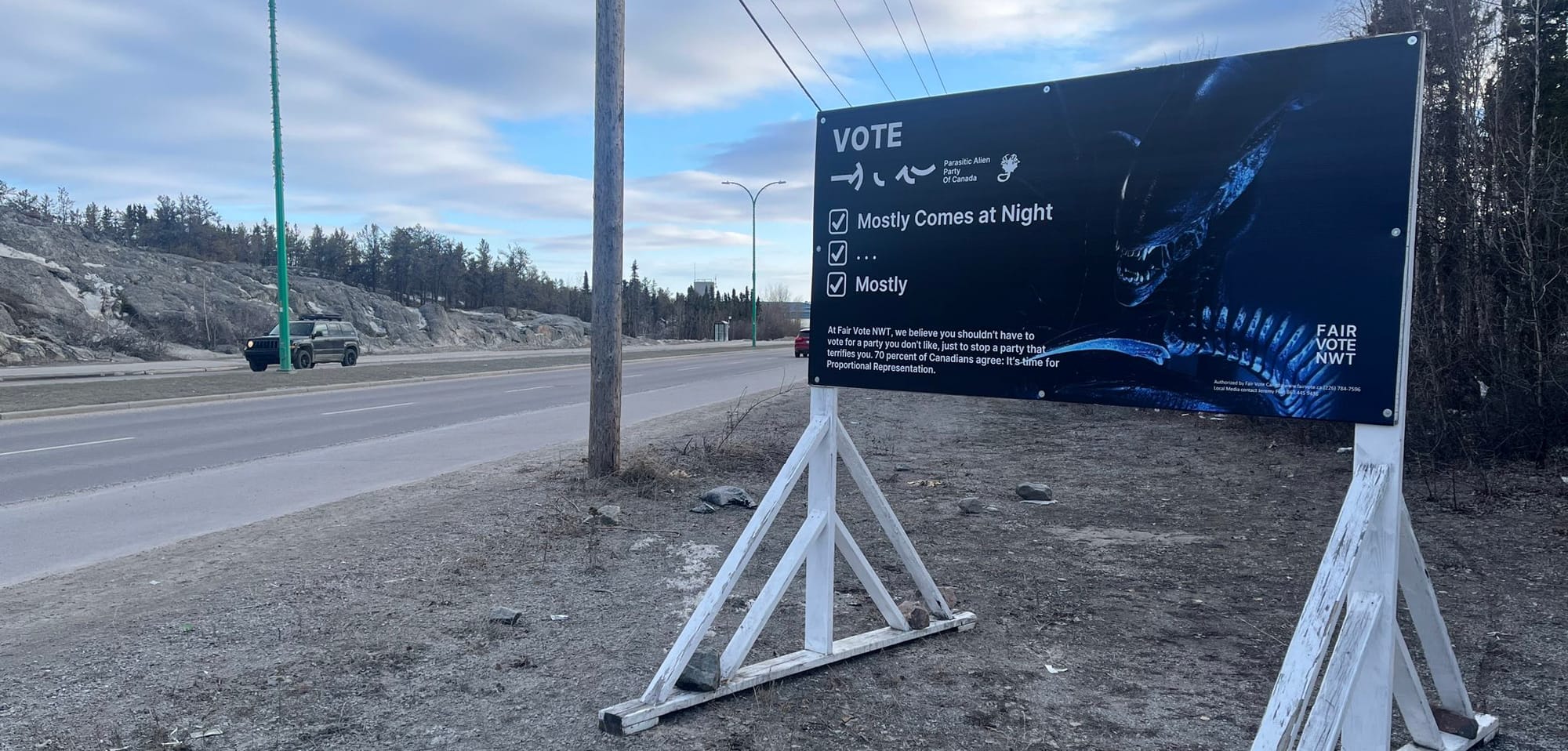
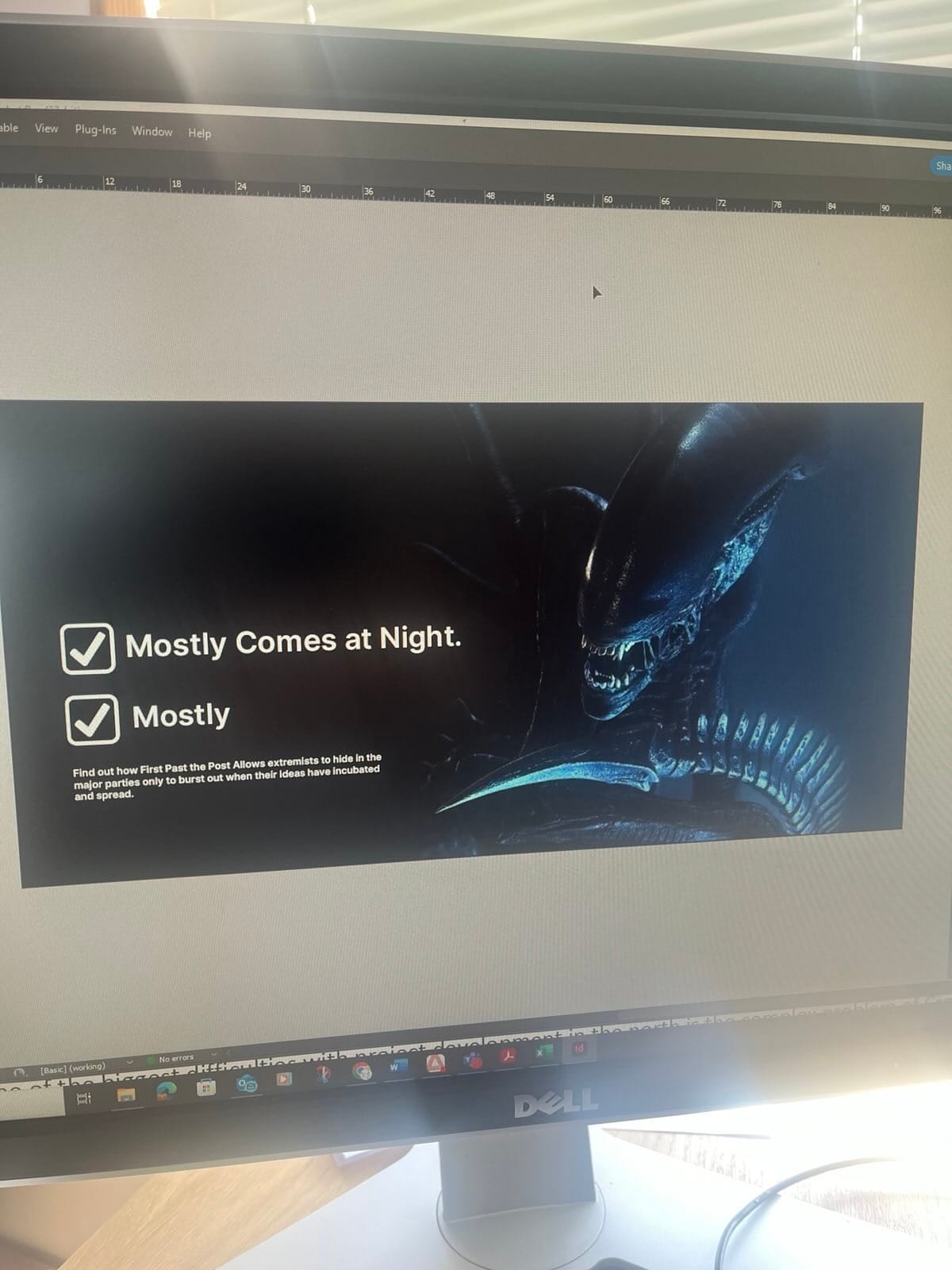
A large part of this campaign's success hinged on designing and printing just two parody election signs during the last federal election. Fairvote NWT then took them to a few annual events around town, explained proportional representation and gathered signatures on the sign creating a powerful visual.
Jeremy and his crew combined his own ideas with inspiration from successful grassroots campaigns like Reclaim Idaho who gathered signatures across Idaho on the side of a camper van. This helped created a powerful image of widespread support for the initiative as people in the town looked closer at the sign and saw see a growing fiesta of their friends and family joining in.
A lot of Jeremy's success came from the authenticity of it all. He made a little demonstration of how our system distorts results with his young children and then went down to a local supermarket for an afternoon with his kids to show it off. It's cute and authentic, people want something real and human these days more than something polished.
A film screening and a few other events and activities drew local media attention and rapidly swayed town. The advocates came across as a cheerful group of reformers having fun, because they were.
Jeremy is a long-time friend of mine and a funny and eccentric comrade in life. One of the strangest things about him is persistent (almost daily) references to 1980s movies. Putting Conan on a joke sign is both amusing and authentic at the same time.
Explaining electoral reform to a city is no small task, but Jeremy whistled while he worked and this won people over. Better yet his group created a strong, community-level comprehension of the issue which not only resulted in a landslide vote but also resilient support that will be there whenever a referendum arrives on the issue in future.
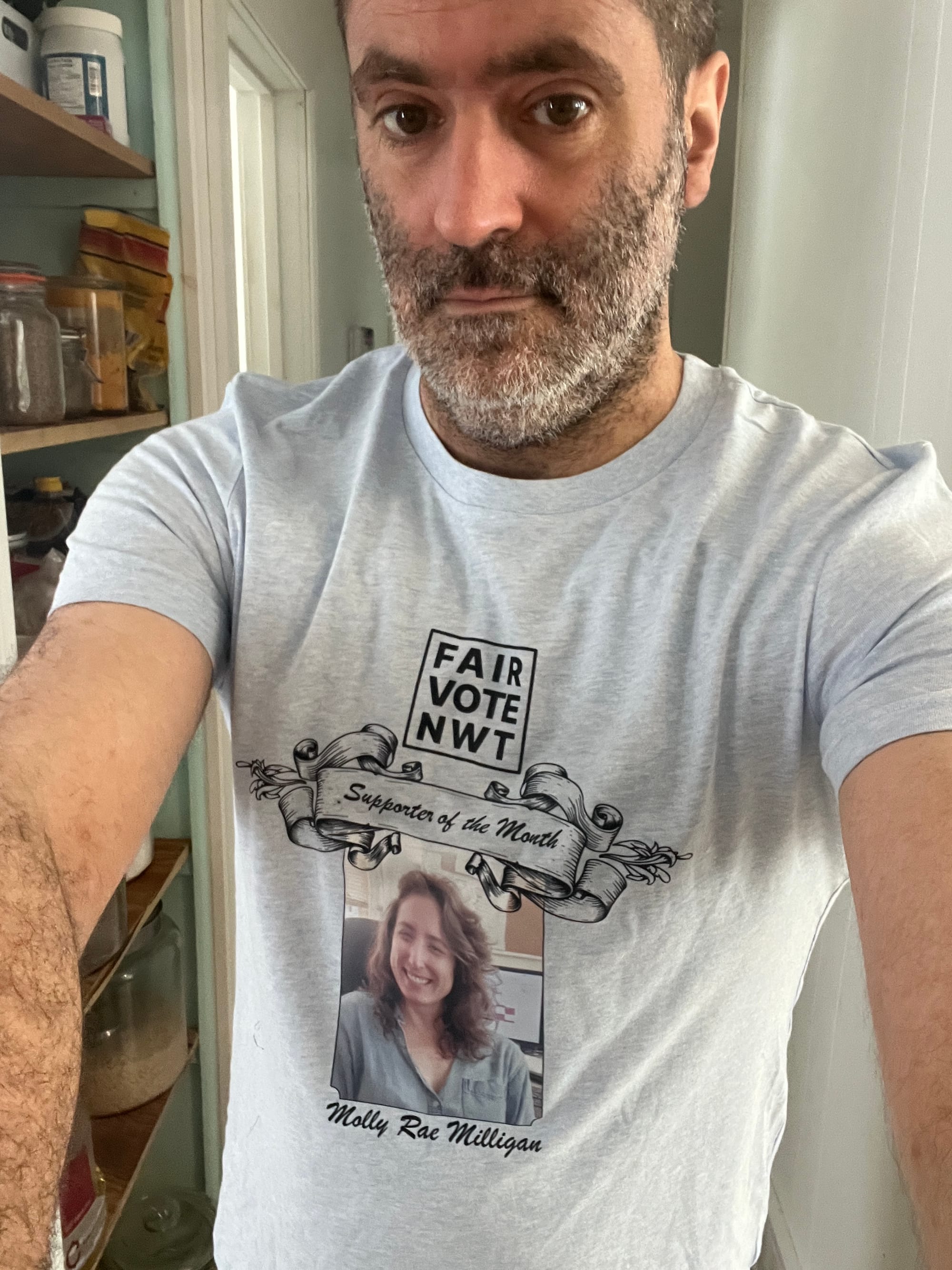
The group met with city councillors, settled on agreeable wording, and less than two years later had this breakthrough that residents of other cities can hopefully follow.
A New Avenue for Electoral Reform
Yellowknife opens a new avenue for proponents of electoral reform. Cities across Canada bear the downsides of a swing-riding dynamic which tend to be centered on the suburbs. Policy lurch and NIMBYism has caused incredible damage to our cities, making them both unaffordable and hard to travel around.
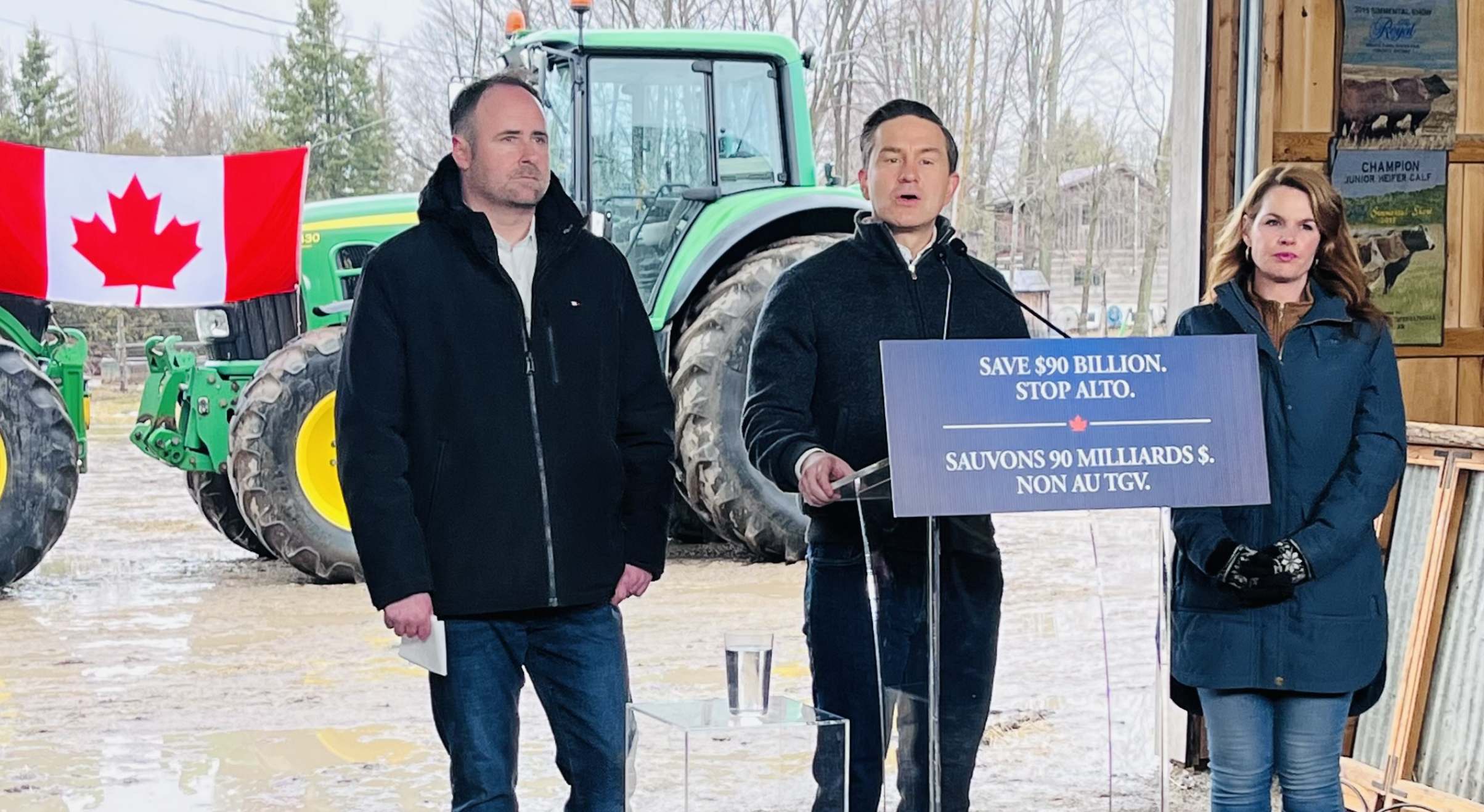
Many Canadian cities like the Ville de Montréal, City of Toronto, or City of Vancouver have an electoral map that prioritizes the surrounding suburbs. Cities can and have asked higher levels of government for electoral reform. In Ontario, the City of Toronto was the driving force behind ranked choice voting which they requested from the province. The province changed the law to allow it, and it was then implemented by several municipalities before Doug Ford took it away.
Be the Catalyst in Your Community
Most reformers spend our time looking at federal and provincial politics, but Yellowknife made me realized we have been missing municipalities. Municipalities are a great place to chip away away at the issue and in many cases, much more. Several large cities like Montreal and Vancouver could easily implement Single Transferable Vote, candidates like Craig Sauvé have even started to campaign on the issue.
Totalling it up, Jeremy spent a few weekends and a dedicated hour or two a week to pull this off. If you're reading this and you're feeling the urge to achieve something for our democracy, have a look at your municipality. City Councilors in Canada are extremely accessible, you'll reliably run into them if you go to public events and it's easy to bring up the issue.
If that is all you have time for, even that might be enough. In 2021 I asked a local councillor if he'd looked into single transferable vote for Montreal and he said he'd look into it. I didn't really think about it until a couple of years later, but that was Craig Sauvé who ended up campaigning on it. I'm sure several people mentioned it, but the 5 minutes i took for me to write to Craig appears to have been time well spent!
Every city in Canada will have a councilor like Craig who is open to the idea, you just need to find them. Once you have, work with them to figure out what is needed to bring this to council and of course, don't forget to have fun while you do it.

Member discussion