



Date: Saturday, August 15, 2026, 9am onwards
The Blue Line extension is five stations and about six kilometres of tunnel, for a figure that has climbed past six billion dollars, making it, along with Canada's other new subways, among the most expensive ever. Numbers that large stop meaning anything: they are a headline for a day and then a line in a budget document nobody reads.
Reece Martin of The Transit Brief is turning that figure into something you can walk. He is marching a route across Montreal from one megaproject to the next, photographing each one and adding it to a running total until the tally reaches the difference between what those five stations cost and what they would cost in Italy, or Korea, which happens to be most of what they cost.
Hospitals, stadiums, towers, electrical infrastructure. By the time he stops walking, you will know exactly how much city billions of dollars buys when it is not spent underground.
Taking part
There is no sign-up sheet for this one. Find Reece on the live map as he walks and join the march wherever it has got to, or catch him at the Supporter Celebration afterwards to hear how the tally came out. Both are supporter-only. Become a supporter to come along on the day.
Why are we doing this?
Transit costs in Canada are high enough that the comparison is the argument. Putting the number beside the buildings it could have paid for is more persuasive than putting it in a table, and it is the kind of thing that is much easier to do with a camera and a day than with a report.
On The Day
A quick update: What happened on the day
Reece set off from near Papineau to walk from megaproject to megaproject, adding up what each one cost until the tally hit the roughly $6 billion the Blue Line extension would save if it were built at European or Asian prices.
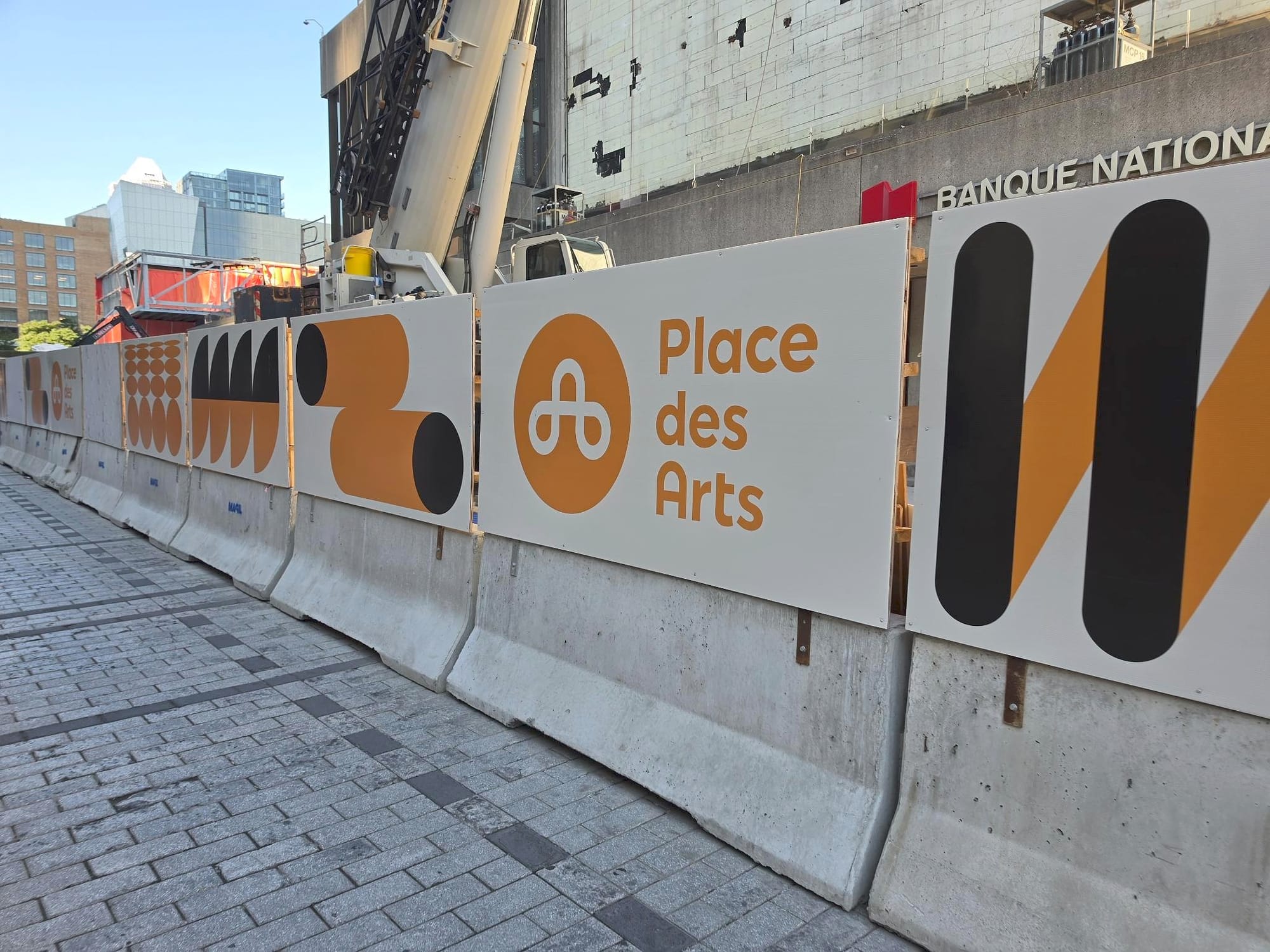
Eight projects later (Place des Arts, Berri-UQAM, Bonaventure, the Palais des Congrès, Sainte-Catherine Street, the New Vic, the Ville-Marie Expressway and the CHUM) the tally had cleared the bar. It took about two and a half hours although because people kept trying to take transit to find him, no-one managed to catch him while he strode the roads.
What was made
 Reece
Reece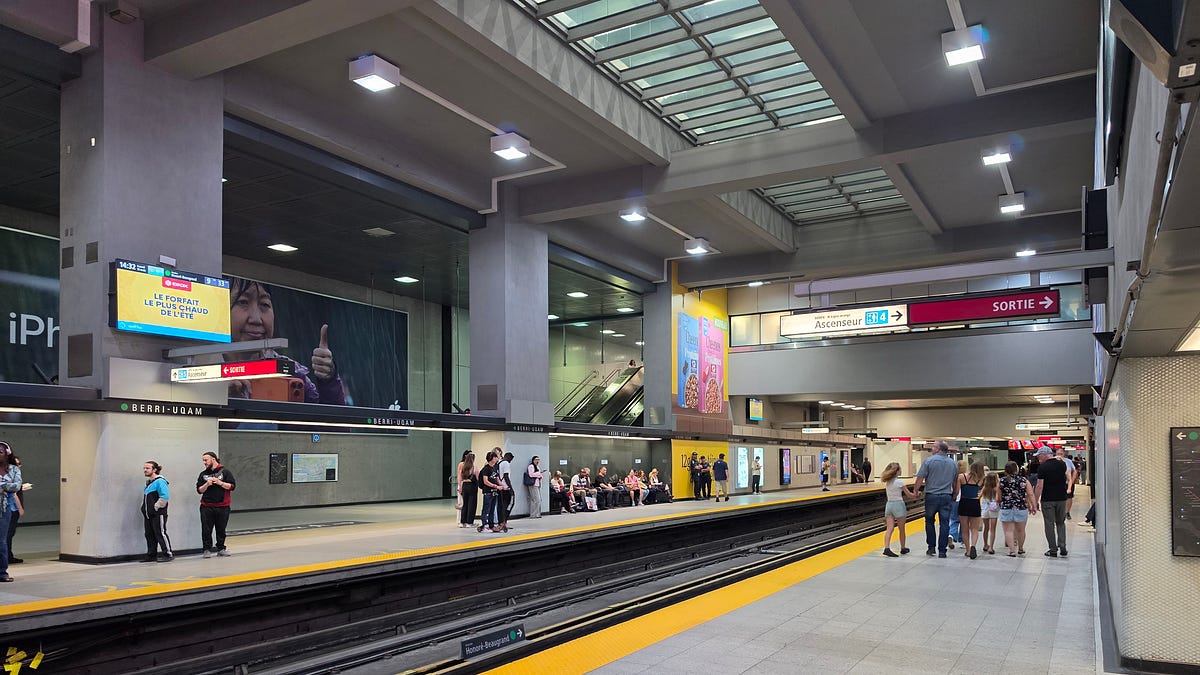
Français
Date : samedi 15 août 2026, à partir de 9 h
Le prolongement de la ligne bleue, c'est cinq stations pis à peu près six kilomètres de tunnel, pour un montant qui a dépassé les six milliards de dollars, ce qui le place, avec les autres nouveaux métros du Canada, parmi les plus chers jamais construits. Des chiffres de même, ça finit par ne plus rien vouloir dire : c'est une manchette pendant une journée, pis après ça une ligne dans un document budgétaire que personne ne lit.
Reece Martin, de The Transit Brief, transforme ce montant-là en quelque chose que tu peux marcher. Il fait un trajet à travers Montréal d'un mégaprojet à l'autre, il photographie chacun d'eux pis il l'ajoute à un total qui monte, jusqu'à ce que la somme atteigne la différence entre ce que ces cinq stations-là ont coûté et ce qu'elles coûteraient en Italie ou en Corée, ce qui représente la majeure partie de ce qu'elles ont coûté.
Des hôpitaux, des stades, des tours, des infrastructures électriques. Quand il va arrêter de marcher, tu vas savoir exactement combien de ville des milliards de dollars achètent quand on ne les dépense pas sous terre.
Participer
Il n'y a pas de liste d'inscription pour celle-là. Trouve Reece sur la carte en direct pendant qu'il marche pis embarque dans la marche où qu'elle soit rendue, ou attrape-le à la Célébration des membres de soutien après pour savoir ce que le total a donné. Les deux sont réservés aux membres de soutien. Appuie-nous pour embarquer le jour même.
Pourquoi on fait ça?
Les coûts du transport collectif au Canada sont assez élevés pour que la comparaison soit l'argument. Mettre le chiffre à côté des bâtiments qu'il aurait pu payer, c'est plus convaincant que de le mettre dans un tableau, pis c'est bien plus facile à faire avec une caméra pis une journée qu'avec un rapport.
Le jour J
Une mise à jour rapide : ce qui s'est passé le jour même
Reece est parti des environs de Papineau pour marcher d'un mégaprojet à l'autre, en additionnant ce que chacun a coûté jusqu'à ce que le total atteigne les quelque 6 milliards de dollars que le prolongement de la ligne bleue économiserait s'il était construit aux prix européens ou asiatiques.
Huit projets plus tard (la Place des Arts, Berri-UQAM, Bonaventure, le Palais des congrès, la rue Sainte-Catherine, le New Vic, l'autoroute Ville-Marie pis le CHUM), le total avait dépassé la barre. Ça a pris à peu près deux heures et demie, mais comme le monde essayait de prendre le transport collectif pour le trouver, personne n'a réussi à le rattraper pendant qu'il arpentait les rues.
Ce qui a été fait
Reece


Member discussion