



Date: Saturday, August 15, 2026, 8am to 6pm
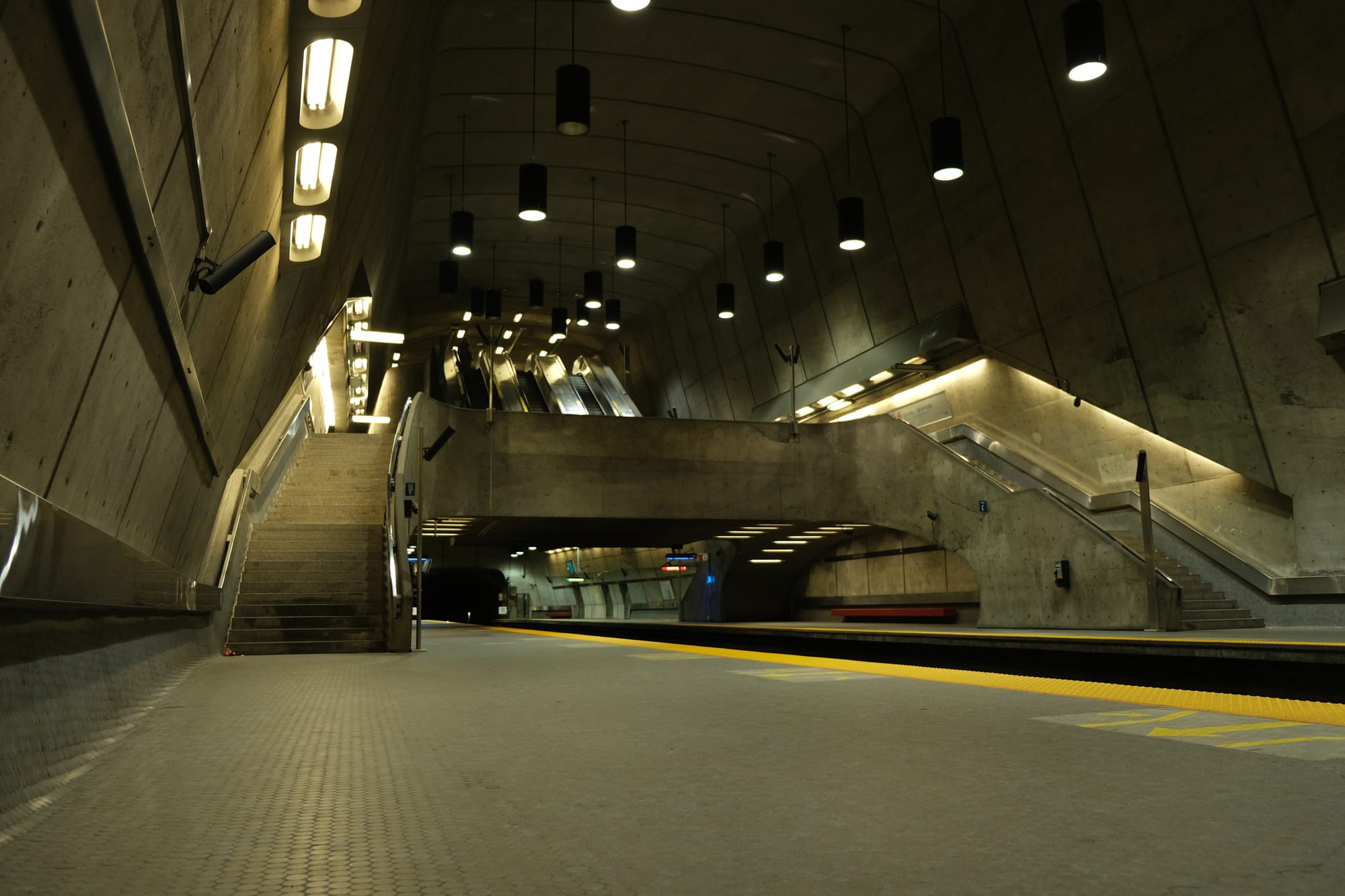
Montreal opened its Metro in 1966 and spent the next fifty-nine years adding elevators to a system that was never designed for them. The result is a network where a step-free journey exists on paper for a small minority of stations, and where whether it exists today depends on one machine in one corridor.
Miles Taylor of Miles in Transit is visiting every accessible station on August 15th to find out which of these journeys is possible on a random Saturday. He is timing the accessible routes, checking whether the critical transfers between lines can be made at all, and recording what happens when those options are down.

To really put the system to the test, he’s traveling with things that genuinely struggle on a staircase. If an elevator is broken, it could be the difference between someone making it to the surface or being stuck on a platform.
Taking part
This one is easy to join for an hour or for the whole day.
- Join at the start or track the group on the live map and meet them at a station along the way.
- If you want, bring an object that tests the accessibility of the Metro. A stroller, a suitcase, a bike, anything that needs the infrastructure to be working.
Why are we doing this?
Accessibility on the Metro gets discussed as a budget line and a future commitment. It is much harder to argue with a day of footage showing what happens when someone turns up at an accessible station and needs it to work. That is the point of doing it in public, with witnesses.
On The Day
A quick update: What happened on the day
Miles and his crew met at Papineau at 8am with a stroller, a car seat, a bike, a scooter, crutches, and a suitcase. Miles took the walking boot and wore it all day. FOR THE BIT!
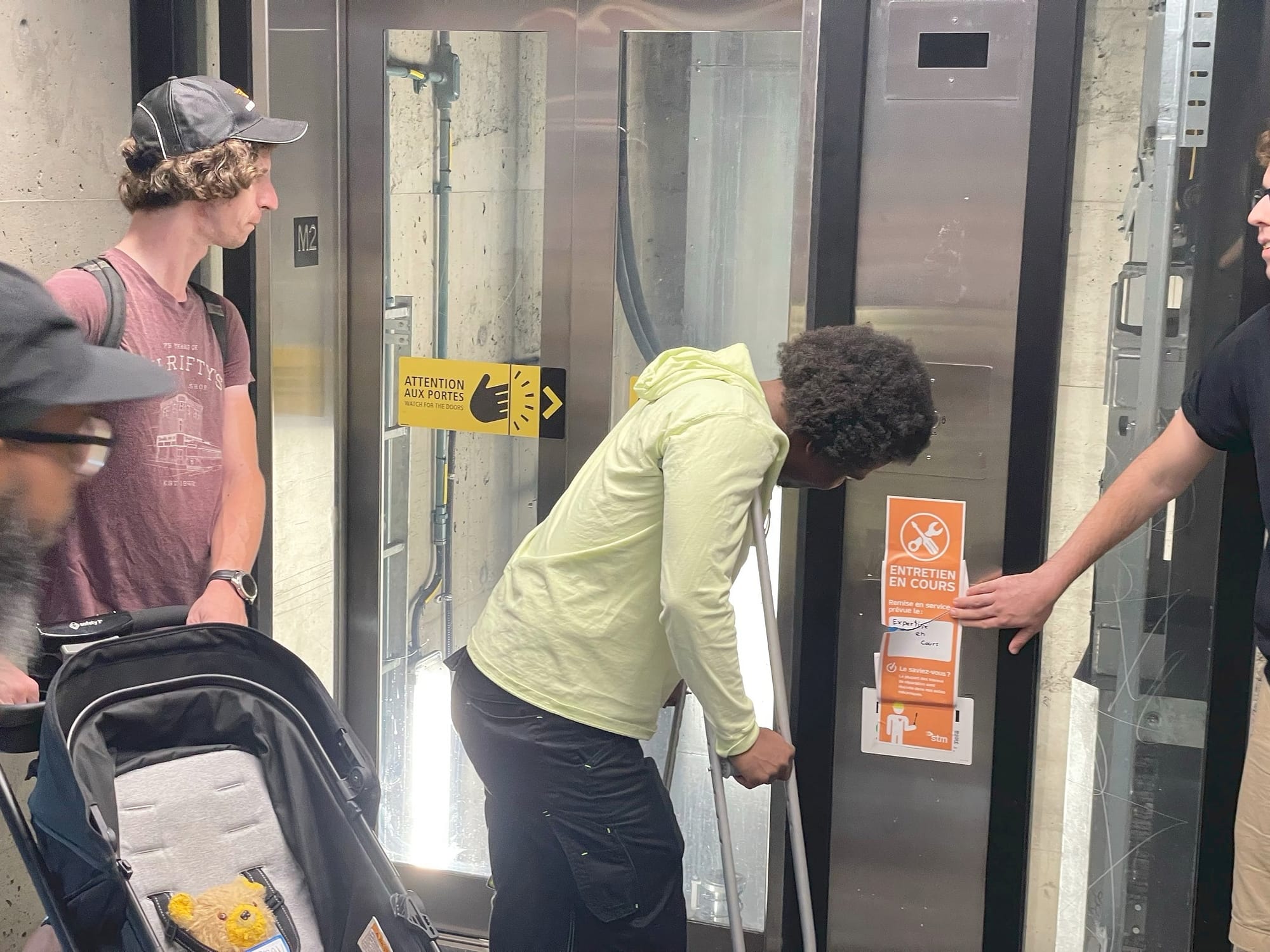
They rode every elevator in the Metro from Laval to Jean-Drapeau. Elevators were sometimes out of service and the three-elevator shuffle at Berri-UQAM took about 35 minutes. Laval turned out to be great! Miles suspected that might be "the first time anyone's ever said that sentence."

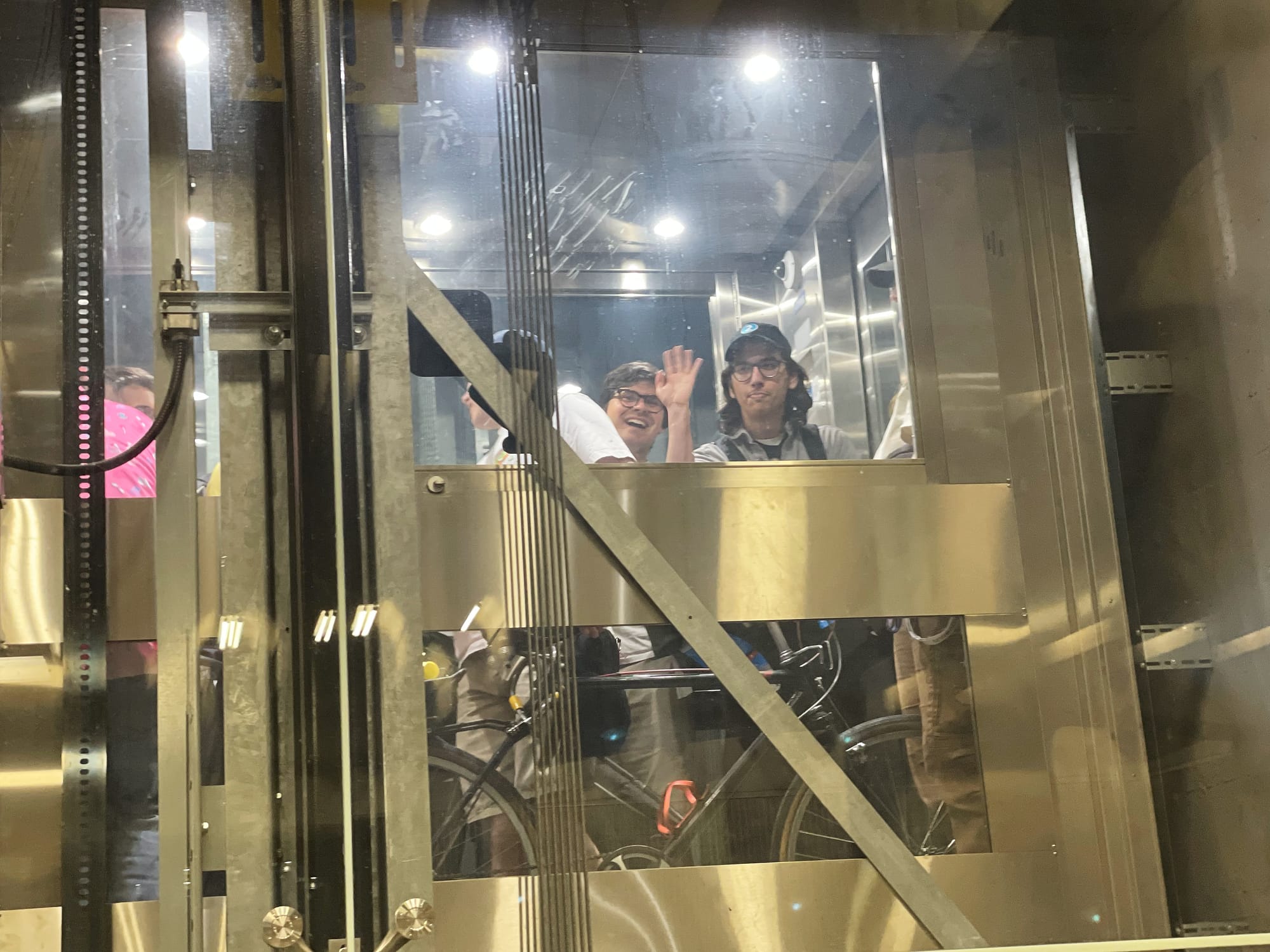
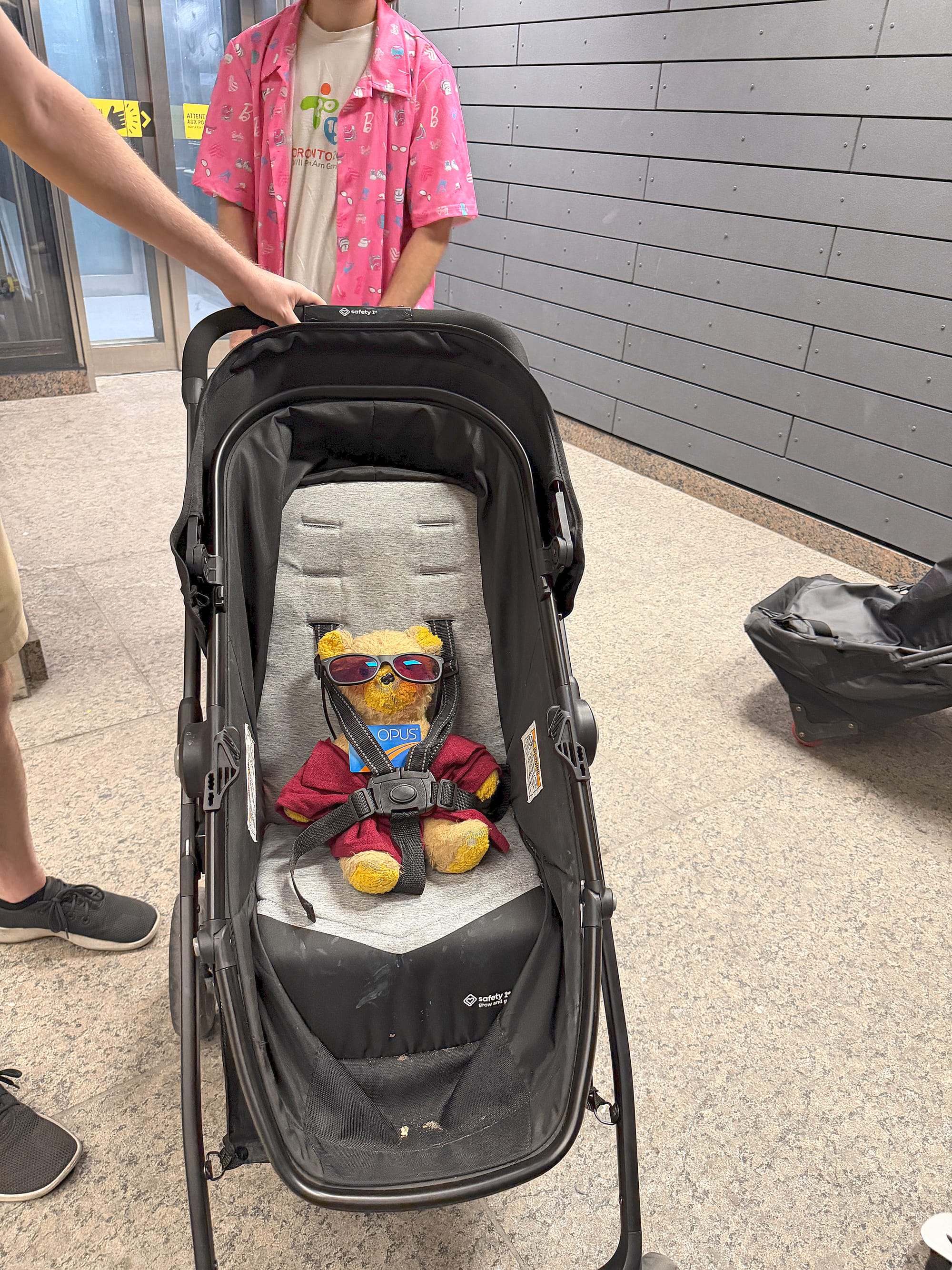
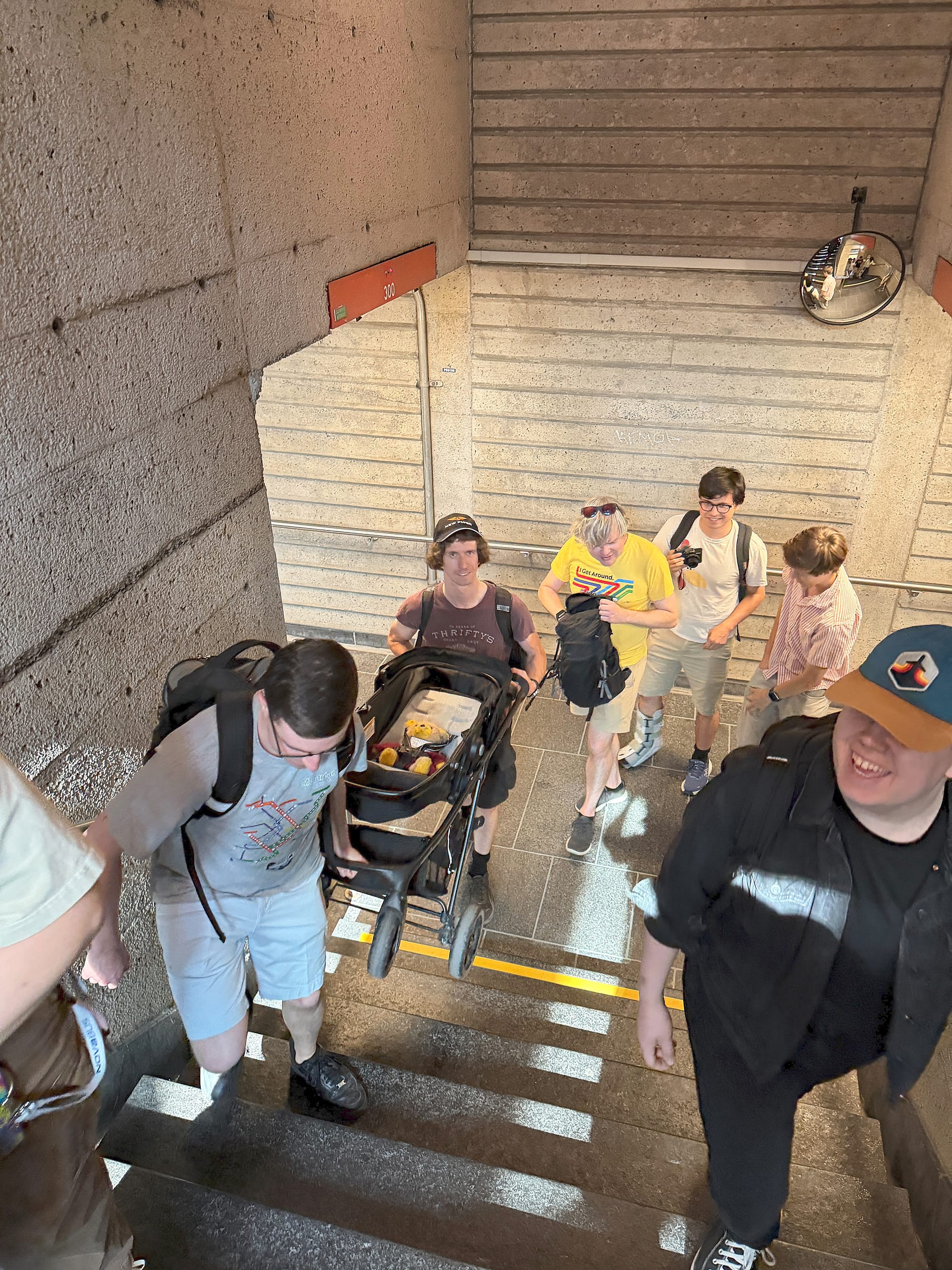
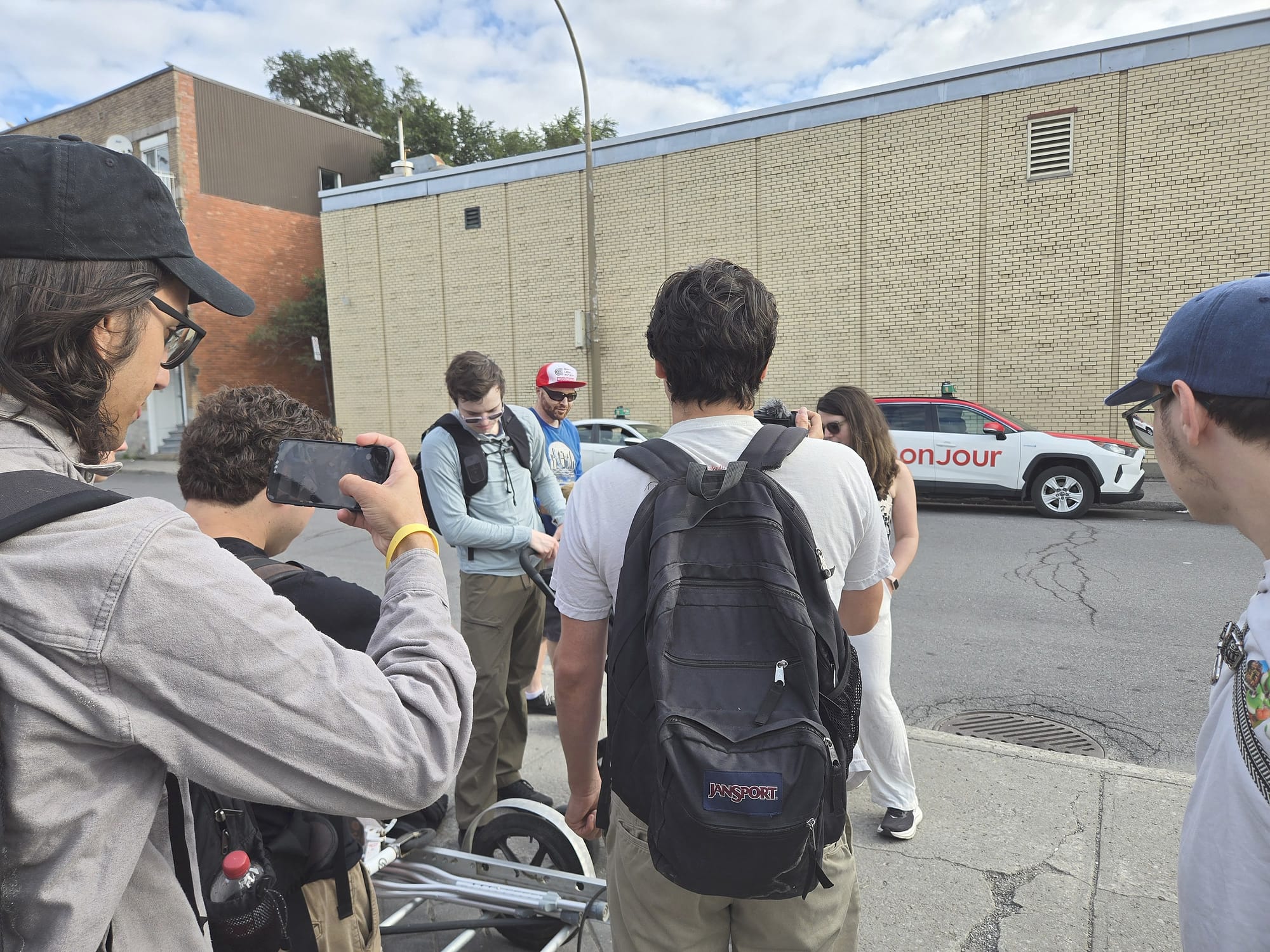
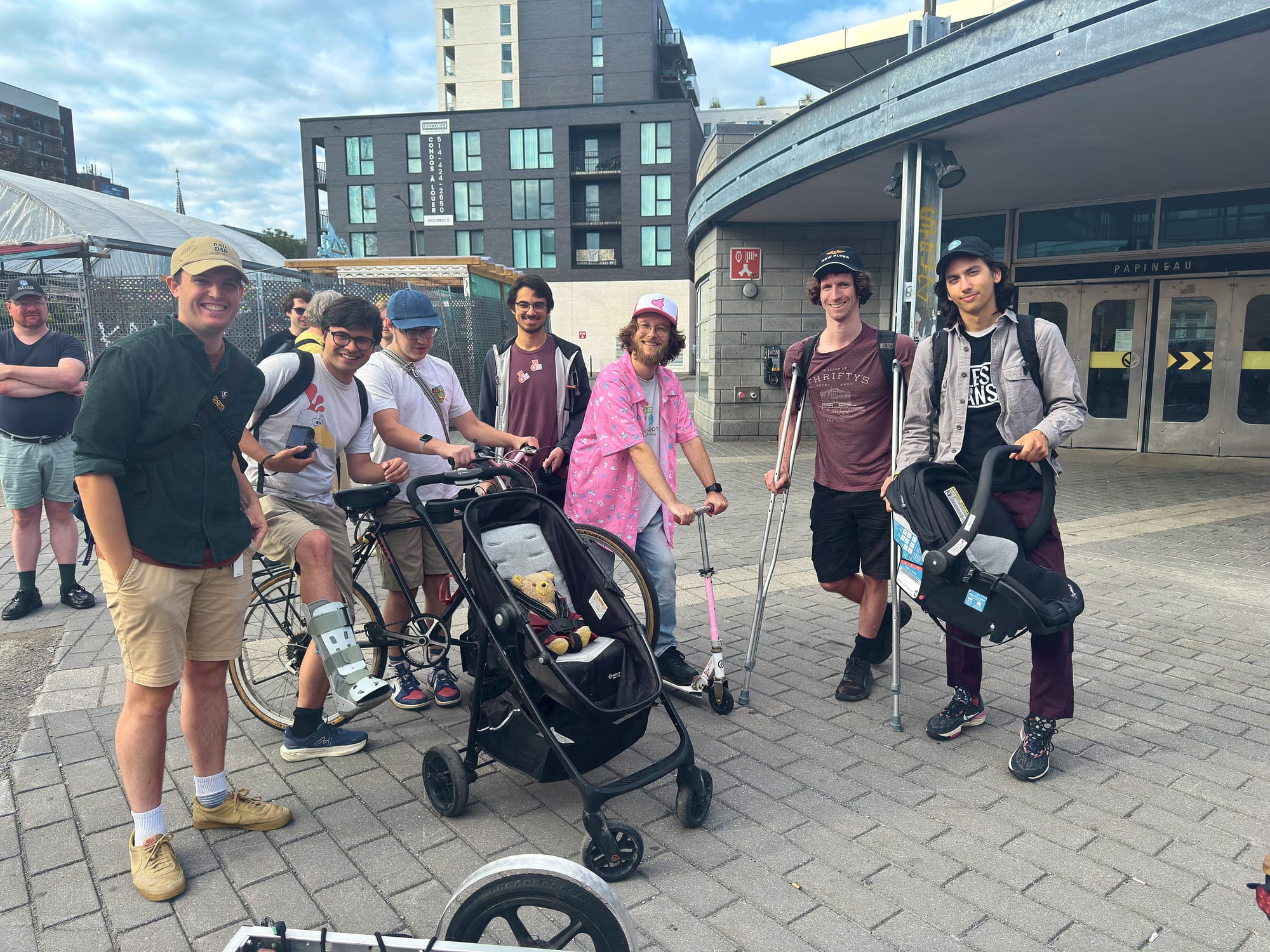
The last station was done at 10 hours, 45 minutes and 2 seconds. The teddy bear in the stroller, renamed from Goldie to Opus Jr. survived.
What was made
A video is in production, keep an eye out the Miles in Transit YouTube Channel and Patreon in the coming months.
Français
Date : samedi 15 août 2026, de 8 h à 18 h
Montréal a ouvert son métro en 1966, pis a passé les cinquante-neuf années suivantes à ajouter des ascenseurs à un réseau qui n'a jamais été pensé pour ça. Résultat : un réseau où un parcours sans marches existe sur papier pour une petite minorité de stations, pis où savoir s'il existe aujourd'hui dépend d'une seule machine dans un seul corridor.
Miles Taylor, de Miles in Transit, va faire le tour de toutes les stations accessibles le 15 août pour voir lesquels de ces parcours-là sont possibles un samedi ordinaire. Il chronomètre les trajets accessibles, il vérifie si les correspondances les plus importantes entre les lignes sont même faisables, pis il note ce qui arrive quand ces options-là sont hors service.
Pour vraiment mettre le système à l'épreuve, il voyage avec des affaires qui ont vraiment de la misère dans un escalier. Si un ascenseur est brisé, ça peut faire la différence entre quelqu'un qui se rend en surface pis quelqu'un de pogné sur un quai.
Participer
Celle-là est facile à rejoindre, pour une heure ou pour la journée au complet.
- Viens au départ, ou suis le groupe sur la carte en direct pis rejoins-le à une station en chemin.
- Si ça te tente, apporte un objet qui met l'accessibilité du métro à l'épreuve. Une poussette, une valise, un vélo, n'importe quoi qui a besoin que l'infrastructure fonctionne.
Pourquoi on fait ça?
L'accessibilité du métro, ça se discute comme une ligne budgétaire pis une promesse pour plus tard. C'est pas mal plus dur d'argumenter contre une journée d'images qui montrent ce qui arrive quand quelqu'un se présente à une station accessible et a besoin que ça marche. C'est pour ça qu'on le fait en public, avec des témoins.
Le jour J
Une mise à jour rapide : ce qui s'est passé le jour même
Miles pis son équipe se sont donné rendez-vous à Papineau à 8 h avec une poussette, un siège d'auto, un vélo, une trottinette, des béquilles pis une valise. Miles a pris la botte de marche et l'a gardée toute la journée. POUR LA JOKE!
Ils ont pris chaque ascenseur du métro, de Laval à Jean-Drapeau. Les ascenseurs étaient parfois hors service, pis le manège à trois ascenseurs à Berri-UQAM a pris à peu près 35 minutes. Laval s'est avéré excellent! Miles soupçonnait que c'était peut-être « la première fois que quelqu'un dit cette phrase-là ».
La dernière station a été bouclée à 10 heures, 45 minutes et 2 secondes. Le toutou dans la poussette, renommé de Goldie à Opus Jr., a survécu.
Ce qui a été fait
Une vidéo est en production, garde l'œil ouvert sur la chaîne YouTube de Miles in Transit pis le Patreon dans les prochains mois.


Member discussion